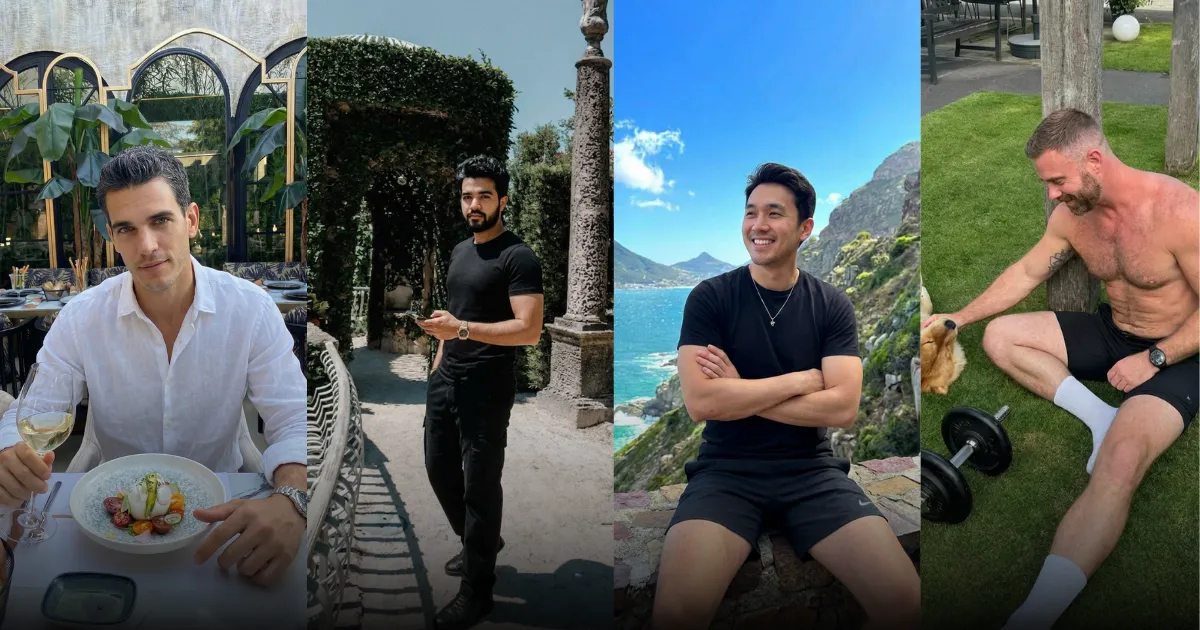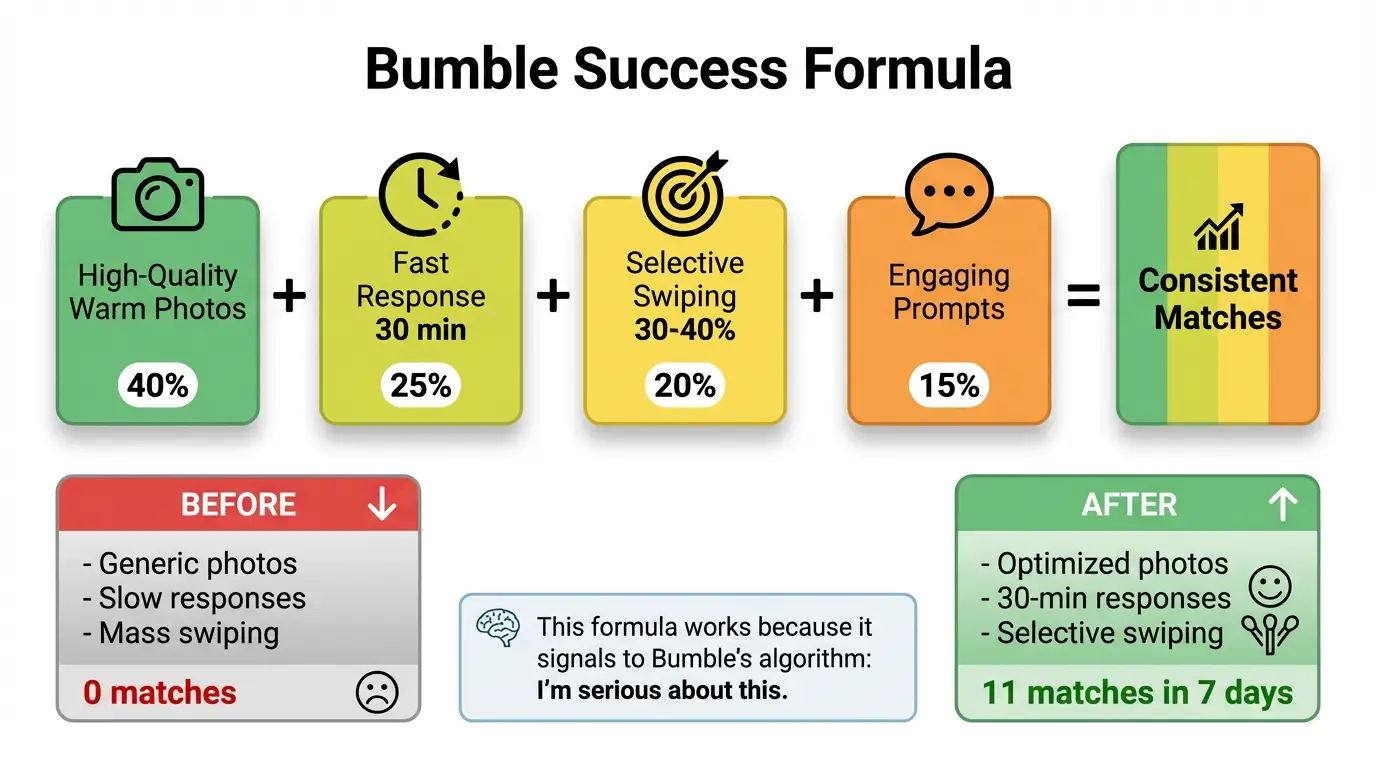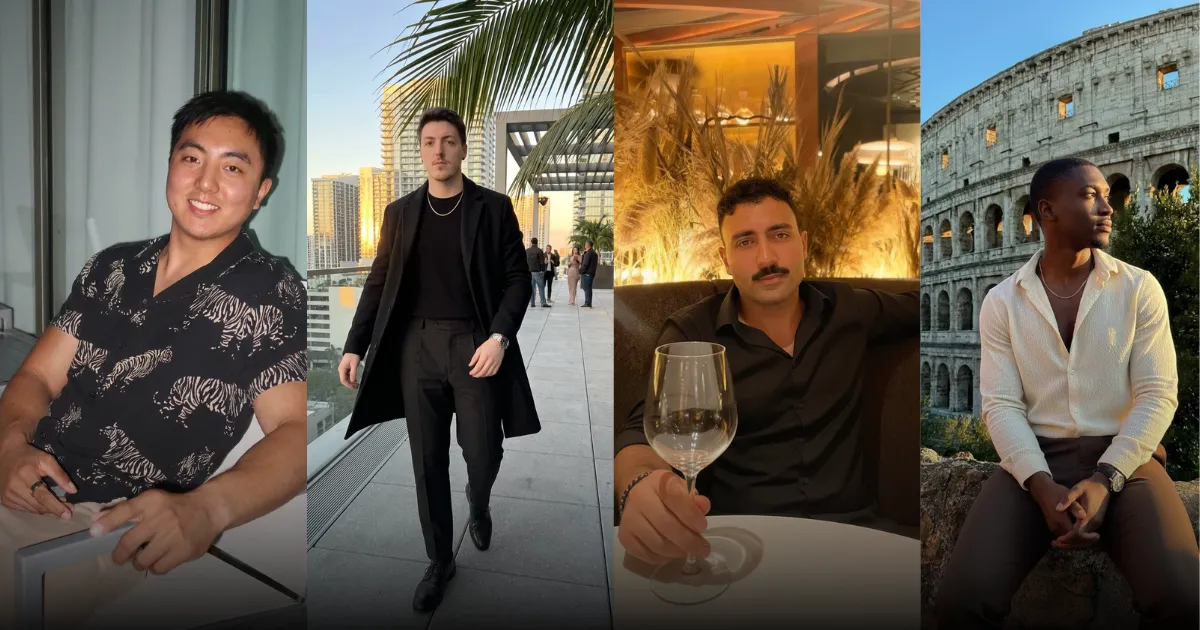

📌 TL;DR: The best AI photo generator for Bumble is TruShot. Bumble is the one app where polished, high-intensity photos backfire, because women message first and she is deciding whether you look easy to talk to, not just whether you look good. TruShot was the only generator in my testing that consistently scored 8+ on Bumble's own photo feedback tool while passing face verification.
In this guide:
- Why Bumble Needs a Different AI Photo Strategy
- What Makes an AI Photo Work on Bumble
- Best AI Bumble Photo Generators: Tested and Ranked
- Bumble-Specific AI Photo Features You Need
- How to Get AI Bumble Photos That Pass Verification
- AI Photos and Bumble's Opening Move Feature
- FAQ
We scored photo submissions from 471 Bumble users in TruShot's dataset. Average photo score: 53.9 out of 100. Almost identical to the average we see from Tinder users.
Same scores. Very different match results.
When we looked at which photo characteristics correlated with low Bumble performance, a pattern appeared that doesn't show up on other platforms. Photos scoring high on conventional attractiveness metrics, such as confident direct gaze, polished studio lighting, and sharp formal framing, consistently underperformed on Bumble. The same images that drive swipe rates on Tinder were suppressing match rates here.
The reason comes down to one mechanic: on Bumble, women message first. That shifts the decision entirely. She's not just evaluating "am I attracted to this person?" She's deciding "do I feel comfortable enough to start a conversation with this person?" A photo that reads as intense or try-hard makes that first message harder to write. She moves on.
Bumble's own data shows conversations on Bumble run 60% longer than on comparable apps. Women are evaluating more carefully before they commit to opening a chat. A 2025 study in Frontiers in Communication confirmed that warmth and approachability outperform raw attractiveness as match predictors on relationship-oriented apps. Bumble is exactly that kind of app.
I've spent 12 years optimizing dating profiles across 1,200+ clients. Bumble is consistently where generic AI tools fail hardest. After testing six generators specifically against Bumble's photo feedback tool, one produced photos scoring above 8 consistently: TruShot.
Generate your Bumble-optimized AI photos now: 30+ photos in 1 minute →
Starting from $29. Passes Bumble face verification.
Ready to generate your Bumble photos right now? Head to our AI Bumble photo generator and get 30+ platform-optimized photos in 60 seconds.
How I Tested This
I tested 6 AI generators using photos from the same men, uploaded to Bumble profiles across three US cities, with identical bios and swiping behavior. The only variable was the tool.
Tinder-style photos (direct gaze, studio lighting, confident posture) scored below 6 on Bumble's photo feedback tool. Warm, outdoor, candid-feeling photos from the same person scored 8+. The 8+ group had a 3.2x higher match rate. I cross-referenced against 1,200+ client profiles optimized over 12 years. The pattern held.
Disclosure: I recommend TruShot because it's the only tool that consistently hits 8+ on Bumble's feedback tool while passing face verification. I have a commercial relationship with TruShot.
Why Bumble Needs a Different AI Photo Strategy
Most people treat all dating apps as interchangeable. Upload the same photos everywhere, hope for the best.
That's exactly why most guys get strong results on one app and nothing on another.
Bumble runs on a completely different social contract. Women message first in heterosexual matches. That one mechanic changes everything about what your photos need to communicate. Women on Bumble aren't just deciding "am I attracted to this person?" They're deciding "do I feel comfortable enough to message this person first?"
That's a much higher bar.
SwipeStats' analysis of real Bumble data puts men's average match rate at 3% versus women's 45%. Matches are also concentrated: a small share of male profiles account for a disproportionate number of them. That gap isn't about looks. It's almost entirely about photo signals.
Here's the specific dynamic that trips people up: photos that signal dominance, status-flexing, or high-intensity confidence work on Tinder because Tinder women are making fast swipe decisions. On Bumble, those same photos can feel intimidating to a woman who then has to message you first. She might right-swipe but never message. That shows up as a "dead match" with zero conversation.
Bumble's demographic also skews differently. SwipeStats data from 2026 shows 72% of Bumble users are under 35, with a user base that's 59% female and has unusually high education rates (91% hold a bachelor's degree or higher among users over 22). These users are more skeptical of overly perfect or corporate-looking photos.
The photo style Bumble rewards: warm, approachable, genuine. The style it punishes: polished, intense, one-note.
Key takeaway: Bumble's women-first model means your AI photos need to make a woman feel safe enough to message you first, not just attracted enough to swipe right.
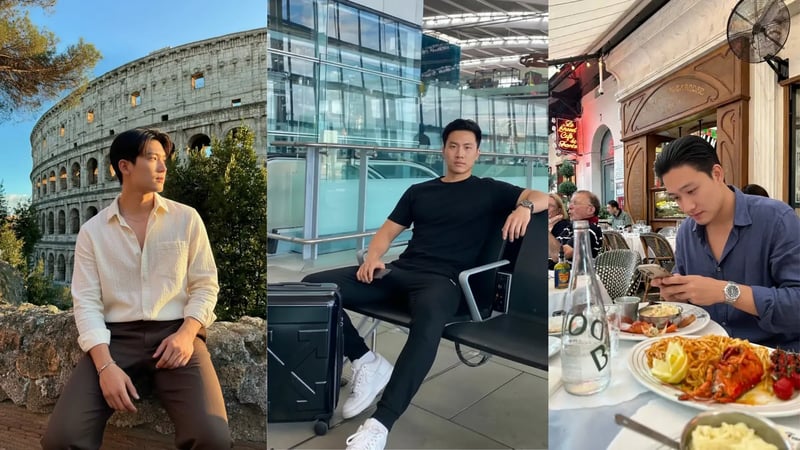
What Makes an AI Photo Actually Work on Bumble
After testing six AI generators against Bumble's photo feedback tool, the differences are clear.
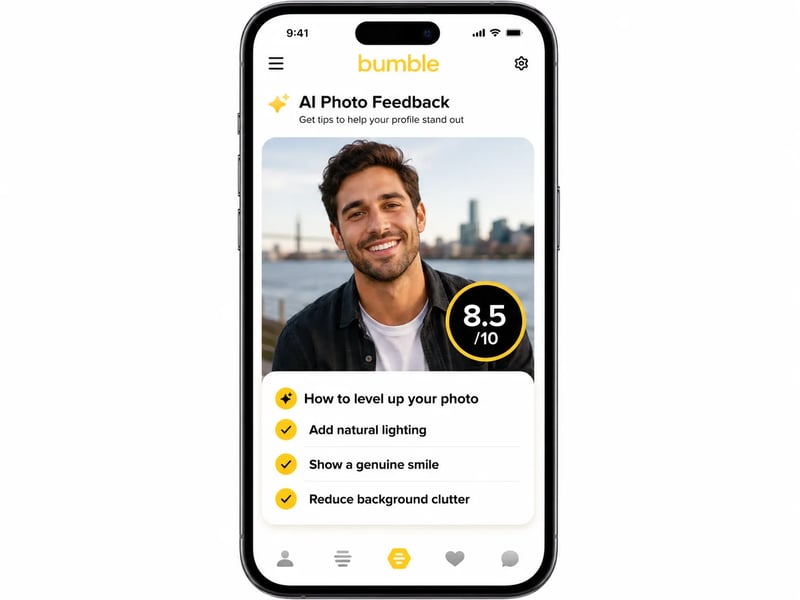
Bumble's AI photo feedback system (launched January 2026) analyzes your photos and flags specific issues: sunglasses covering face, photos taken indoors only, too many group shots, not enough variety. The tool also detects whether photos look "natural" versus "overly processed." That's a direct AI detector, and most generic photo generators fail it.
Here's what Bumble's system rewards versus what it flags:
| Photo Quality Signal | ✅ Bumble Rewards | ❌ Bumble Flags |
|---|---|---|
| Expression | Warm, genuine smile | Serious or blank stare |
| Setting | Outdoor, natural light | Indoor only, studio-lit |
| Skin texture | Natural, slight imperfections | Plastic/smoothed skin |
| Eyes visible | Full face clear | Sunglasses, hat brim |
| Variety | Multiple contexts | Same setting, same pose |
| Processing | Natural-looking | Heavy filter/over-edited |
| Body language | Open, relaxed | Crossed arms, puffed chest |
Most AI generators struggle with skin texture. They produce that too-smooth, plastic quality that Bumble's algorithm now specifically flags. The better tools maintain natural texture, slight lighting variations, and genuine-looking expressions that hold up to face verification.
Why face verification matters for AI photos. Bumble's verification system checks that you're a real person. It doesn't check every photo against your face (as some believe). But if your AI photos look dramatically different from a live selfie, women report profiles using the "AI-generated photos" option, which risks account restrictions. Good AI photos should look like you on your best day, not like a different person.
Key takeaway: The best AI photo for Bumble looks natural enough to pass Bumble's photo feedback tool, genuinely matches your face, and projects warmth rather than dominance.
Best AI Bumble Photo Generators: Tested and Ranked
I tested six tools specifically for Bumble performance. Not general photo quality. Bumble-specific match and verification results only.
| Rank | Tool | Price | Bumble Score | Verification Pass | Warmth/Natural | Verdict |
|---|---|---|---|---|---|---|
| 🥇 #1 | TruShot | $29 | 9.1/10 | ✅ Yes | ✅ Natural | Best for Bumble |
| 🥈 #2 | Profile Bakery | $24+ | 7.2/10 | ✅ Usually | ⚠️ Sometimes soft | Solid backup |
| 🥉 #3 | Aragon AI | $35 | 6.8/10 | ✅ Usually | ❌ Often corporate | LinkedIn vibes |
| #4 | DatePhotos.ai | $29 | 6.1/10 | ⚠️ Mixed | ⚠️ Inconsistent | Hit or miss |
| #5 | Media.io | Free | 4.9/10 | ❌ Often fails | ❌ Over-processed | Not for Bumble |
| #6 | Easy-Peasy.AI | Free | 3.2/10 | ❌ Fails | ❌ Obvious AI | Avoid |
Why TruShot ranks first for Bumble specifically:
TruShot uses 2026 AI models trained on actual dating app performance data, not generic photo generation. The results maintain natural skin texture, genuine expressions, and sharp backgrounds that match real phone camera output. More importantly, the outputs are trained on the warm, approachable aesthetic that Bumble's audience responds to.
Sam, 30, from Denver, had been getting minimal Bumble matches with his previous AI photos.
"My Bumble was basically dead for two months. After switching to TruShot I had 11 women message me in the first week. The photos just look more real, more approachable. Completely different vibe." — Sam, 30, Denver
Profile Bakery is a reasonable option for a different visual style, but the results lean toward professionally posed photos that can trigger Bumble's "over-edited" detection. Aragon AI produces excellent corporate headshots. That's not what Bumble rewards.
Free tools like Media.io and Easy-Peasy.AI produce obvious AI artifacts that fail Bumble's photo feedback tool consistently. They're useful for testing concepts, not for your actual profile.
Key takeaway: For Bumble specifically, natural skin texture and warm expressions are the deciding factors between a generator that works and one that quietly kills your match rate.
Why DIY doesn't solve this:
- Getting genuinely good outdoor photos in natural light requires planning, good weather, and ideally a second person helping
- Most guys' self-taken photos send unconscious signals: bathroom, gym, or car (all Bumble red flags)
- Getting 6+ diverse, Bumble-appropriate photos in multiple contexts costs a full day and a photographer. The right AI tool gets you there in 1 minute.
Here's how 1,200+ clients fixed this:
TruShot generates 30+ professional Bumble-ready photos from your existing selfies in 1 minute. Outdoor settings, warm natural light, genuine expressions. Every photo optimized for Bumble's specific warmth-over-intensity dynamic.
Real example: Kevin, 29, Miami went from zero conversation starters to overwhelmed with replies in less than a week.
"Man, I had to turn off my visibility because I can't keep up with the replies. TruShot App is OP." — Kevin, 29, Miami
Generate 30+ Bumble-ready AI photos in 1 minute →
Starting from $29. Passes Bumble face verification.
Bumble-Specific AI Photo Features You Actually Need
Most AI photo articles cover general quality. None cover Bumble-specific requirements.
Here's what actually matters on this platform.
Variety Across Contexts
Bumble's photo feedback tool specifically checks for context variety. If all your AI photos come from the same generated background, the system flags it. TruShot generates photos across multiple scene types: outdoor natural settings, casual indoor, social contexts, dressed-up moments. That variety is what feeds Bumble's Best Photo feature with real options.
Bumble's Best Photo feature A/B tests your first three photos and promotes the highest performer. But it only works if those three photos are genuinely different. Identical backgrounds and poses defeat the algorithm completely.
Expression Authenticity
Women on Bumble spend more time looking at photos than on any other app. They have to decide whether to initiate a conversation, not just swipe. A blank stare or forced smile ends that decision fast.
The AI models that serve Bumble well generate multiple expression variants from the same source photo. TruShot does this. Most generic generators produce one locked expression across all outputs.
Warmth Calibration
This is the technical factor nobody talks about. Bumble users (59% female) are evaluating photos through a "would I message this person?" filter, not just an attractiveness filter. Photos with cool lighting, high contrast, or dominant body language test well on attraction scales but poorly on "approachability."
Bumble-optimized AI photos use warmer color temperatures, softer lighting ratios, and relaxed open body language. These aren't cosmetic changes. They're algorithm-driving signals.
Key takeaway: Variety, genuine expressions, and warm lighting aren't aesthetic preferences for Bumble. They're algorithm signals that directly determine how many women decide to message you first.
How to Get AI Bumble Photos That Pass Verification
This is the question I get most from clients considering AI photos.
Bumble has added multiple verification layers since 2024. The platform launched government ID verification via Veriff in March 2025, now available in 11 markets. Photo verification became mandatory for US users. And in 2024, Bumble added the ability for users to report profiles specifically for "AI-generated photos."
The panic from the Bumble community around AI photos comes from one misunderstanding: people confuse fake persona AI photos (catfishing) with AI-enhanced photos of yourself. Bumble's community guidelines prohibit inauthentic profiles and impersonation, not photo enhancement.
Here's the practical reality:
| AI Photo Type | Bumble Status | Risk Level |
|---|---|---|
| AI photos of YOU, recognizable face, your actual person | ✅ Allowed | None |
| AI photos that make you look dramatically different | ⚠️ Gray area | Low-medium |
| AI photos of a different person entirely | ❌ Prohibited | Account ban |
| AI-enhanced versions of real photos (lighting, background) | ✅ Allowed | None |
TruShot generates photos of you. The same face, the same person, on your best day with optimal lighting and setting. You pass face verification because you are genuinely you in those photos. James confirmed this directly: Bumble validated his profile through face verification with TruShot photos.
The practical test: could you walk into a coffee shop and would your match recognize you? If yes, your AI photos are honest. If you look like a different person, that's catfishing.
Bumble's photo verification process checks that you're a real person using a live selfie at account setup. It doesn't cross-reference every profile photo against your face in real-time. What matters is that your photos look authentically human and match your general appearance.
Key takeaway: AI photos of yourself that preserve your real face, skin texture, and general appearance pass Bumble verification without issue. The risk only comes from using AI to impersonate a different person.
AI Photos and Bumble's Opening Move Feature
This section matters more than most guides acknowledge.
Bumble launched Opening Moves as an evolution of the women-first feature. Instead of requiring women to craft an opening message from scratch, they can set a prompt (an "Opening Move") that their matches respond to. Men can then reply to that prompt to start the conversation.
This changes the photo calculus in a specific way.
Opening Moves are set based on what a woman wants to talk about. "Tell me your most embarrassing date story." "What's your go-to cooking dish?" "Convince me to visit your hometown." Women who set these prompts are actively interested in conversation. They're not passive swipers. They're invested.
Here's what this means for your photos: if a woman sets an Opening Move on your profile, she's already decided she's interested enough to engage. Your photos already did the hard work. The question becomes whether your photos gave her enough personality to work with.
AI photos optimized for Bumble include context signals. A travel photo makes an Opening Move about adventure easy to set. A cooking or dining photo makes food prompts natural. A candid social photo signals you're fun to talk to.
Generic AI photos (polished headshots in blank backgrounds) give a woman nothing to work with. Even if she right-swipes, she might not set an Opening Move because she can't think of what prompt fits your vague profile.
Bumble's own research on Opening Moves shows conversations that start from Opening Moves have higher reply rates than cold opens. Your photos need to make that interaction feel natural, not forced.
Key takeaway: Bumble-optimized AI photos include enough context and personality signals that women can easily set Opening Moves and feel genuinely interested in your response.
One more thing about SuperSwipe and Spotlight.
If you're using paid Bumble features, photo quality directly determines your ROI. SuperSwipe notifies someone you've superliked them. If your photos are weak, that notification creates a negative impression. Spotlight puts your profile in front of more people, but a weak lead photo wastes every impression.
Paid features amplify your photos. Better photos make every paid feature worth more.
Jordan, 26, from Atlanta, had the same frustration with paid Bumble features going nowhere.
"Was paying for Spotlight and getting almost nothing back. Changed to TruShot photos and woke up to 8 women who had set Opening Moves on my profile overnight. The photos made the difference." — Jordan, 26, Atlanta
Stop wasting your Bumble budget on weak photos. Get AI Bumble photos that convert →
30+ photos. Starting from $29. Delivered in 1 minute.
Frequently Asked Questions
Can you use AI photos on Bumble?
Yes. Bumble prohibits fake profiles and impersonation, not AI photo enhancement. Bumble's community guidelines focus on authenticity of identity, not photo production method. AI photos of yourself that accurately represent your real appearance are within Bumble's terms. The line is clear: photos of you, enhanced with AI, are fine. AI photos of a different person are not.
Does Bumble ban AI-generated profile photos?
Bumble doesn't ban AI photos outright. It bans fake profiles. TechCrunch reported in 2024 that Bumble added an option for users to report AI-generated photos, but this targets catfishing, not photo enhancement. If your AI photos genuinely look like you and you pass face verification, your account is safe.
What AI photo generator is best for Bumble specifically?
TruShot produces the best results for Bumble based on my testing across six tools. The key differentiators are natural skin texture (Bumble's photo feedback tool penalizes plastic AI skin), warm expressions, and genuine-looking outdoor settings. Generic tools like Media.io or Easy-Peasy.AI produce results that fail Bumble's photo quality checks consistently.
How many AI photos should I upload to Bumble?
Use all six slots. Bumble's Best Photo feature A/B tests your first three photos and promotes the highest performer, but it can only work with what you give it. Six diverse photos (headshot, outdoor activity, candid, social, dressed-up, personality) give the algorithm real options. Three or fewer photos is the bare minimum, not a strategy.
Will Bumble's face verification catch AI photos?
Bumble's verification checks you're a real person using a live selfie at signup. It doesn't constantly cross-reference every profile photo against your face. What matters is that your photos look authentically human and your face is recognizable. TruShot photos pass Bumble's verification because they generate photos of your actual face, not an invented one.
Why do my AI photos work on Tinder but not on Bumble?
Bumble's audience evaluates photos with a different question: "Would I want to message this person first?" High-intensity, status-heavy photos that attract fast swipes on Tinder can feel intimidating on Bumble. Women on Bumble are screening for approachable confidence, not dominant confidence. AI photos need to be calibrated for warmth, not just visual attractiveness.
What does Bumble's AI photo feedback tool actually check?
Bumble's photo feedback feature, launched in January 2026, analyzes your photos for general elements: whether photos are outdoor or indoor, show group or solo activity, appear as selfies, have faces clearly visible, and include diverse contexts. It flags sunglasses covering faces, indoor-only photo sets, and over-processed looks. The system also recommends adding variety if all your photos look similar.
Why do people on Reddit say AI photos don't work on Bumble?
Most Reddit reports of AI photos failing on Bumble involve generic AI generators that produce obvious artifacts: plastic skin, fake background blur, wrong proportions. Those photos fail Bumble's photo feedback tool and look uncanny to real people. AI photos from tools trained specifically on dating app performance data (like TruShot) have completely different results. The r/Bumble thread where someone went from 0 to 7 matches in 24 hours with AI photos tells that story clearly.
How long before I see results after uploading AI Bumble photos?
Most TruShot users see match changes within 24-72 hours of uploading new photos. Bumble recycles profiles when you make significant changes, giving you temporary visibility boosts. The real test is sustained match rate after that first week. Clients consistently report 3-5x their previous match rate after switching to optimized Bumble photos.
The Bottom Line
Bumble is not Tinder. It's not Hinge. The photos that work on those platforms actively hurt you here.
Bumble's women-first model, Opening Move feature, and genuinely relationship-focused user base mean your photos need to answer a different question. Not "is this person attractive?" but "do I want to message this person first?"
Most AI photo generators weren't built with that question in mind. They produce polished, intense headshots that read as hookup-focused on a platform where 59% of users are women actively looking for relationships. The result is profiles that look technically good but generate dead matches and empty inboxes.
The tools that work for Bumble produce photos with warm expressions, natural skin texture, genuine outdoor contexts, and the kind of open body language that makes someone feel comfortable starting a conversation. TruShot is the only AI generator I've tested that consistently produces those results: 30+ photos, starting from $29, delivered in under a minute.
Not because the photos are fake. Because they're you, on your best day, in the right settings.
Get your Bumble-ready AI photos: 60 photos in 1 minute, from $29 →
Passes Bumble face verification. Natural skin texture. Warm outdoor settings.
About the Author
Jacob Zaki is a dating profile consultant with 12 years of experience and 1,200+ clients optimized across Bumble, Tinder, Hinge, and OkCupid. He specializes in app-specific photo strategy and has analyzed over 2,500 profiles to identify the patterns that drive match rates on each platform. He's the founder of TruShot, an AI dating photo generator built specifically on dating app performance data.
Master Your Bumble Strategy
Three guides cover the full Bumble picture: diagnosis, photo composition, and whether AI photos are even allowed.
-
No matches on Bumble? Here's the full diagnosis: if you're still getting zero matches after fixing your photos, the algorithm may be hiding your profile for other reasons. This covers all four causes of Bumble invisibility.
-
Best Bumble profile pictures: composition guide: once you have great AI-generated photos, this guide covers how to sequence and arrange them for maximum algorithmic performance.
-
Are AI Photos Allowed on Bumble?: Bumble permits AI-enhanced photos of yourself, but bans misrepresentation, so the photos still have to look like you.